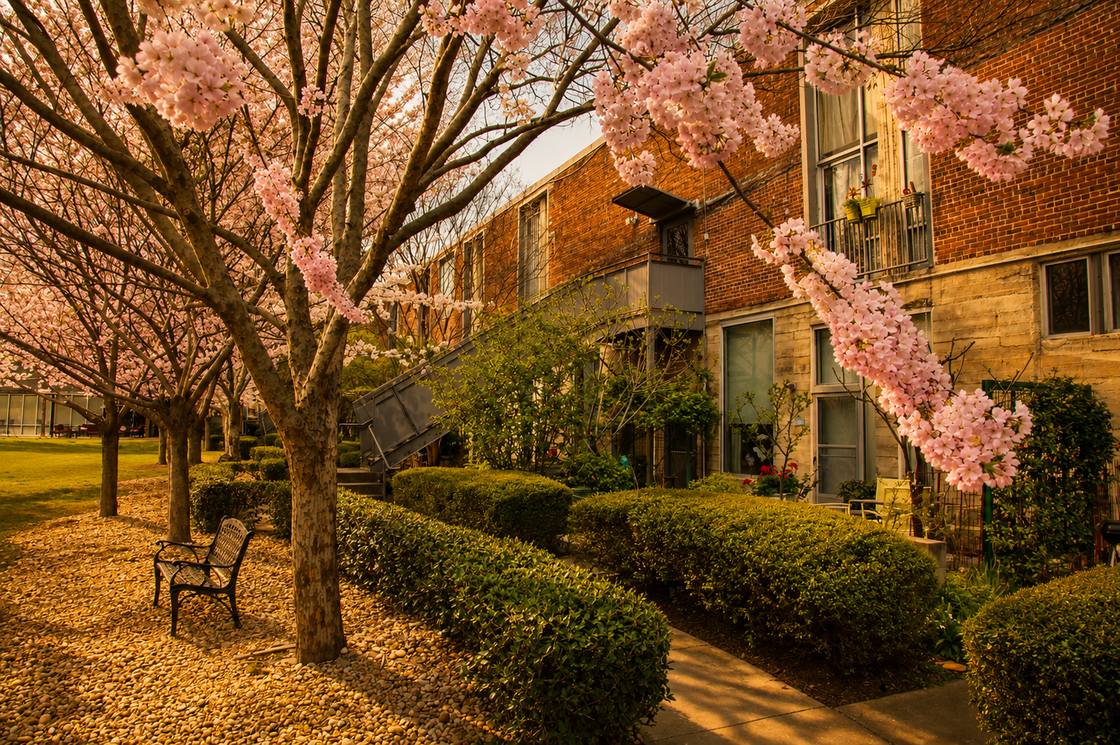
Live
Light-filled loft homes with soaring ceilings, original concrete columns and courtyard views. A real neighborhood, from cherry-blossom spring to golden fall.
Studioplex Condominium Association · Old Fourth Ward, Atlanta
Historic roots. Creative spirit. Connected community.
Loft homes, studios, businesses and galleries — sharing one extraordinary 1905 landmark in the heart of the Old Fourth Ward.
Welcome home & welcome in
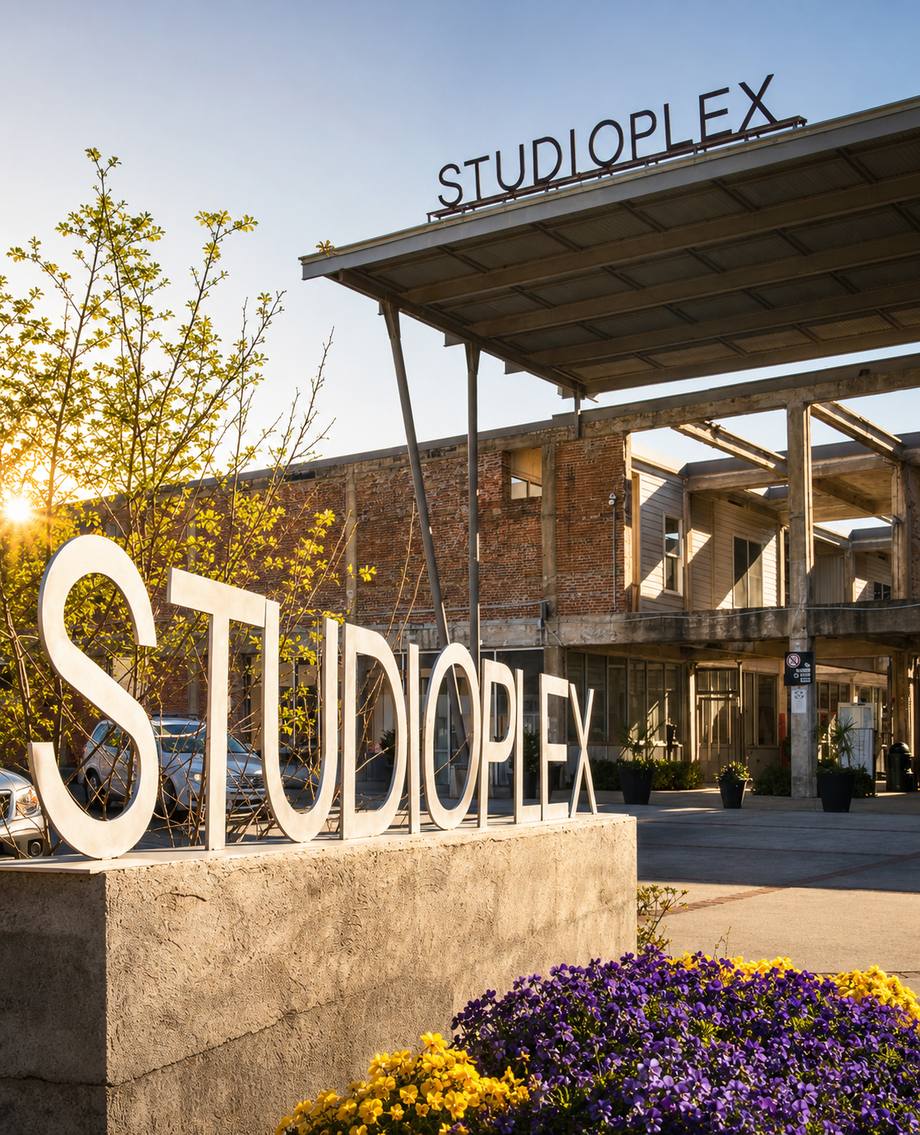
Studioplex on Auburn is a mixed-use community where people live, work and make things side by side. Behind the weathered brick and board-formed concrete you'll find loft homes, working studios, independent businesses and rotating galleries — all under the roof of a building that helped shape Atlanta more than a century ago.
We recently reclaimed our original name as a tribute to this remarkable street and the people who restored it. We think it matters to honor the past while living fully in the present — so come as a resident, a customer, an artist or a curious visitor. There's room for all of you here.
659 Auburn Avenue NE — a stone's throw from the Atlanta BeltLine.
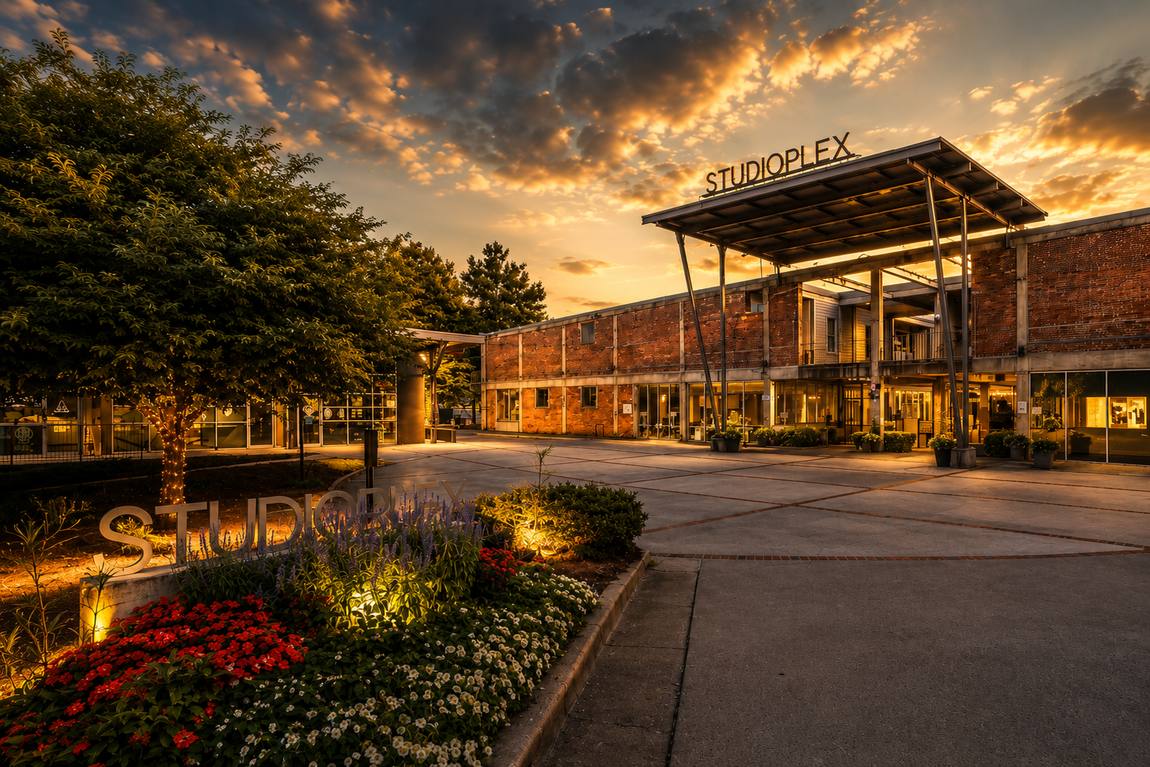
Life at Studioplex
Loft character on the inside, a real community on the outside, and a landmark looked after with care. Here's what living here feels like.
Soaring ceilings, original brick, exposed structure and historic warehouse windows.
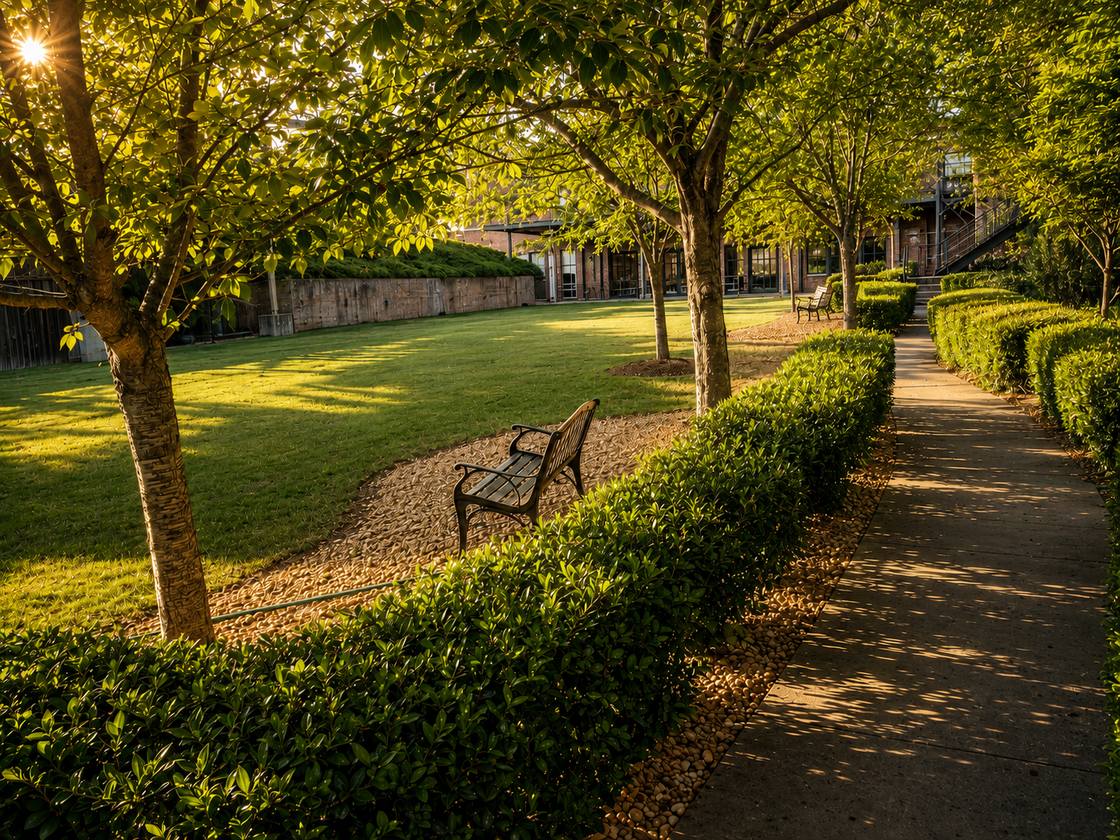
Landscaped outdoor spaces made for gathering, relaxing and connecting.
A diverse group of neighbors who value respect, creativity and collaboration.
Steps to the BeltLine, Krog Street Market, Ponce City Market and more.
Professionally managed for peace of mind and long-term preservation.
Studioplex today
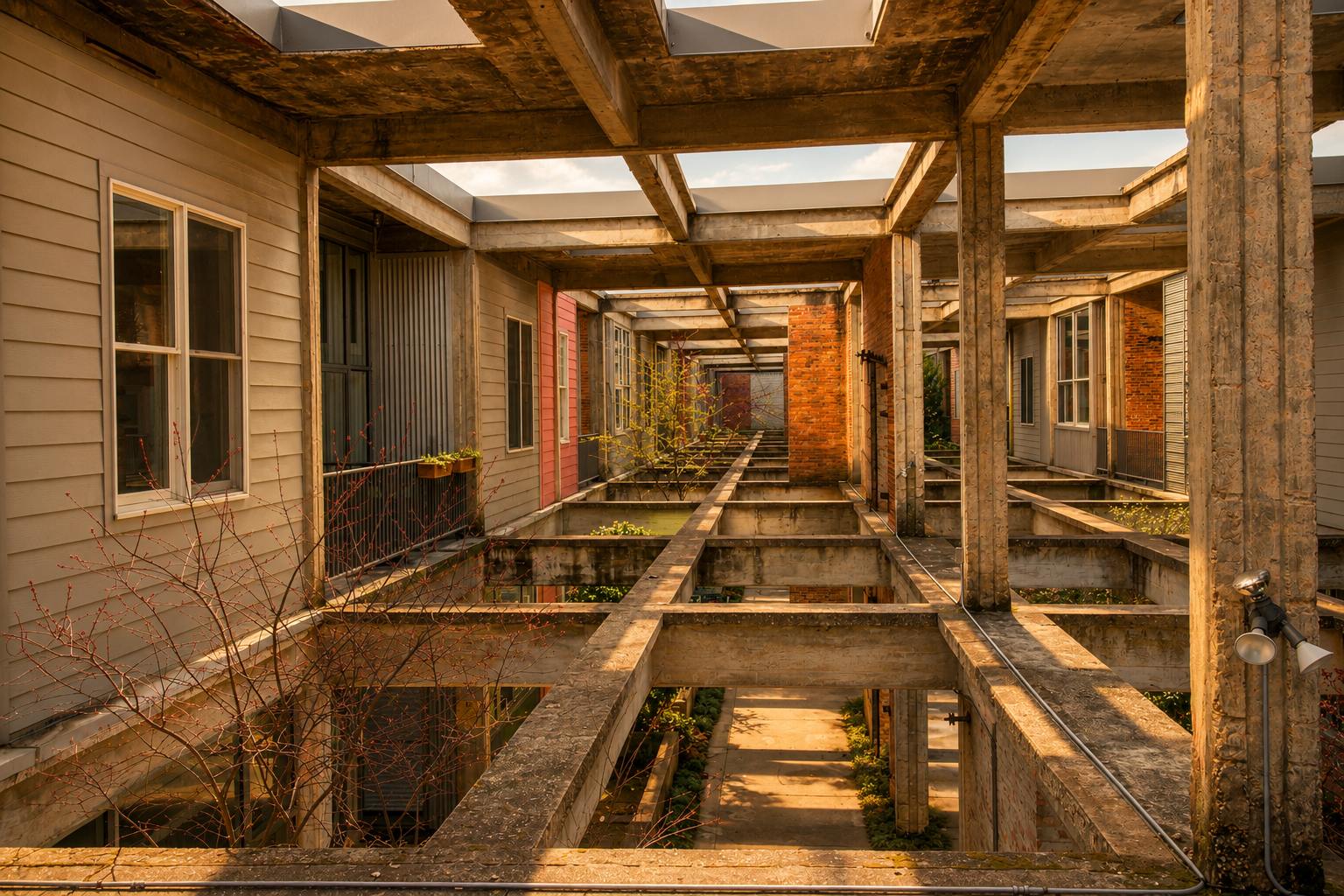
Our lofts open onto planted courtyards, our storefronts face a shared plaza, and touches of its artist-community past remain everywhere you look. Mixed-use isn't a slogan here — it's the floor plan.
Light-filled loft homes with soaring ceilings, original concrete columns and courtyard views. A real neighborhood, from cherry-blossom spring to golden fall.
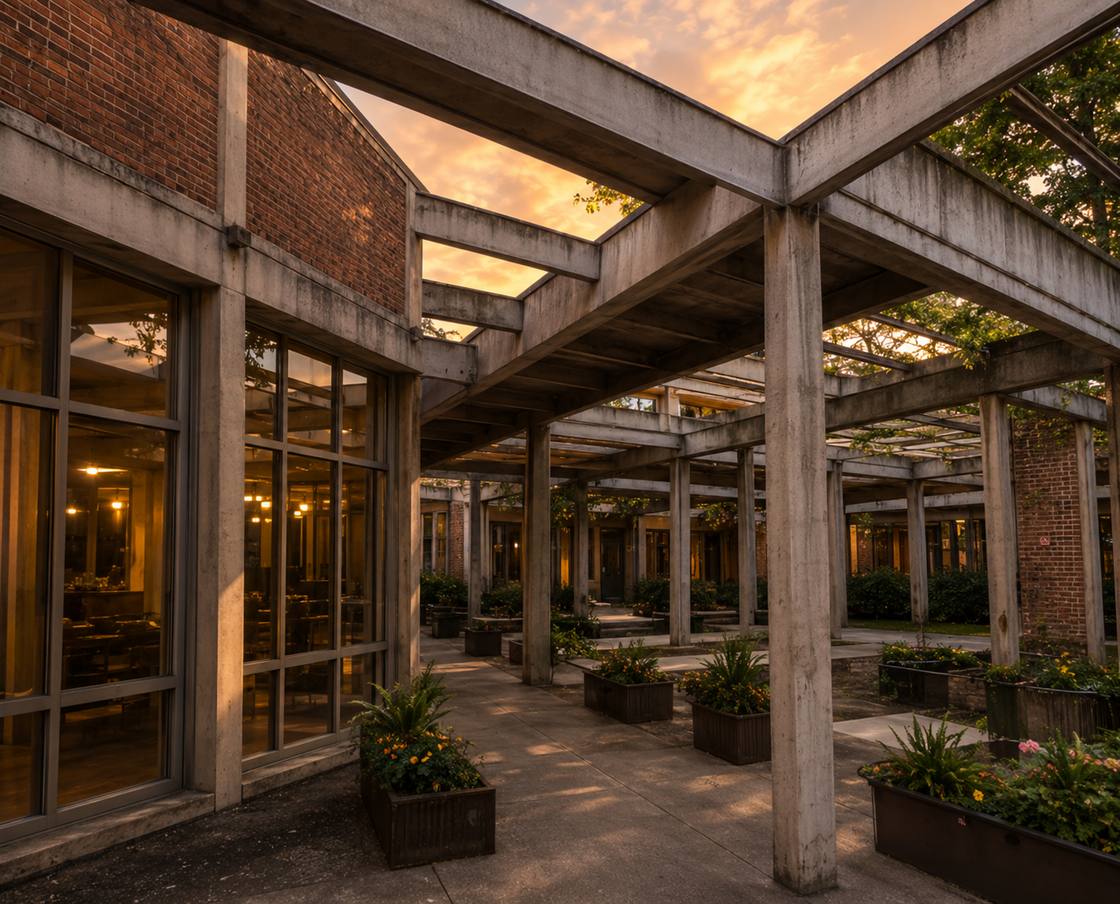
Studios and independent businesses share the ground floor and the plaza — makers, designers and small companies who wanted a workplace with a story.
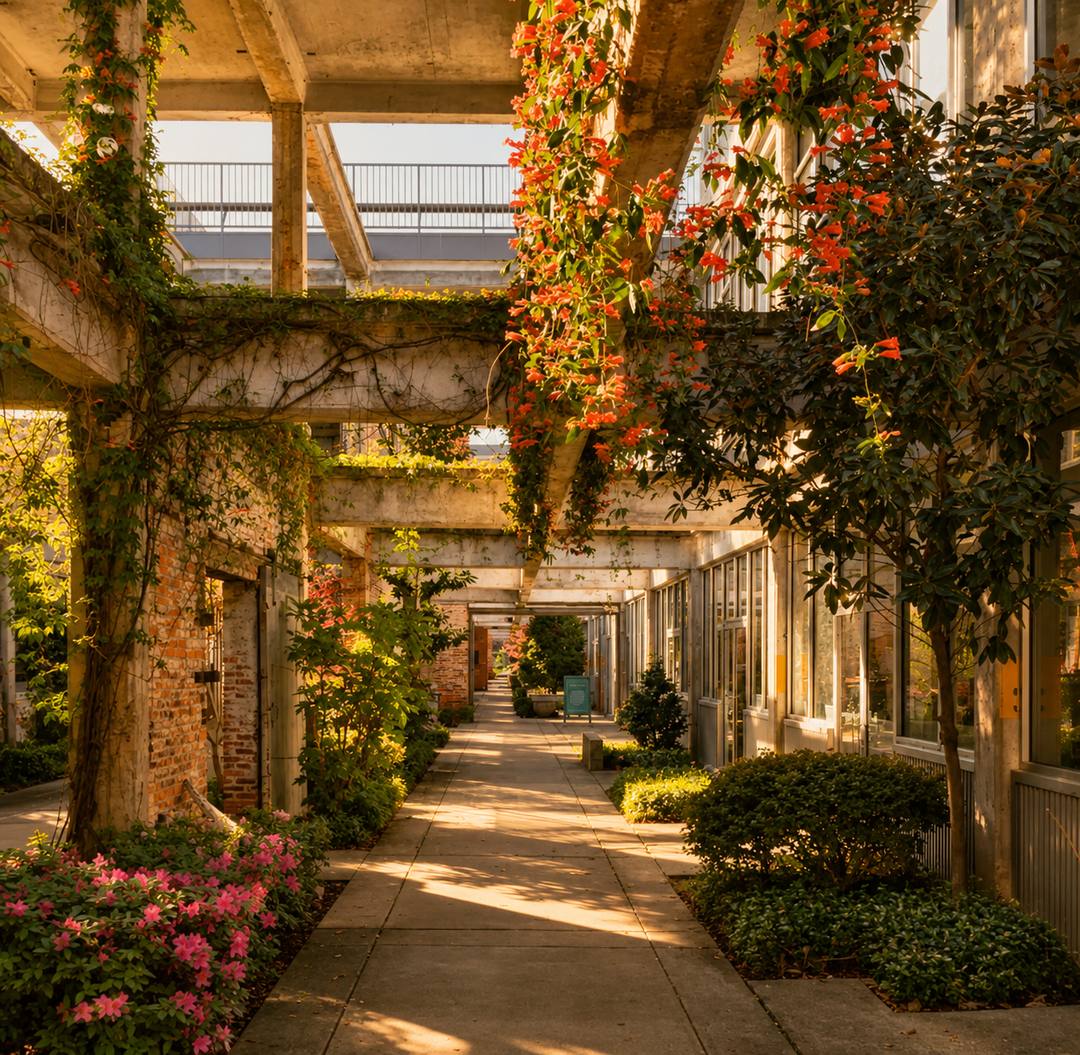
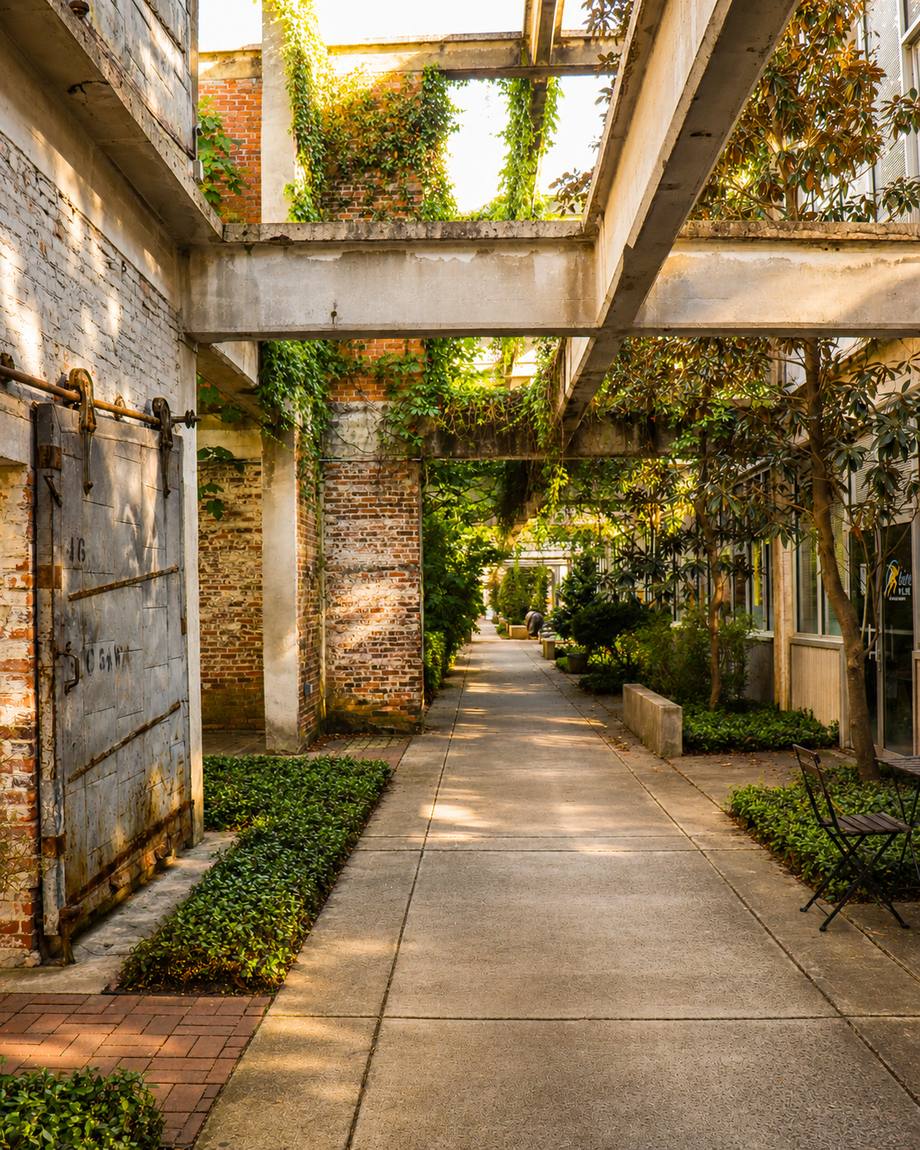
Wander the courtyards, take in the history and public art, take the historical tour, or just sit under the vines with a coffee. Everyone is welcome to explore.
Listed on the National Register — twice
First as a marvel of 1905 cotton-industry engineering. Then as the cornerstone of Auburn Avenue's revival — a community of artists. Both stories still live in these walls.
Part one · King Cotton & the machine age
You're standing on the site of the Atlantic / Southeastern Compress & Warehouse — a plant that helped push Atlanta to the center of the cotton trade. Georgia's climate grew the crop, the railroads carried it, and this building did the heavy lifting in between.
1905 · The compress arrives
Ginned cotton was baled into 500-pound bundles, then squeezed here to half their size so more could fit on rail cars and ships. Two older Atlanta presses — Bell Street and Peters Street — were dismantled and combined into one plant with more than double the capacity. Atlanta's share of the project alone was estimated around $250,000 — roughly $9.5 million in today's dollars, a serious civic investment at the time.
c.1905 · Structural innovation
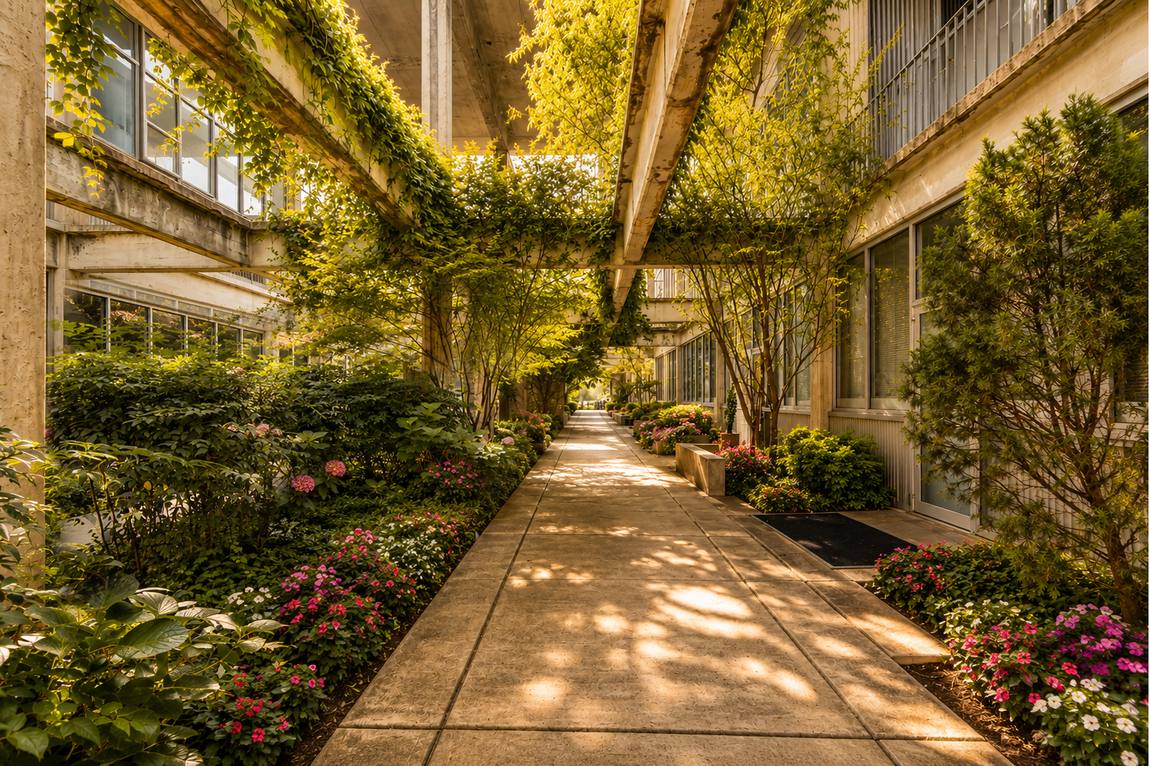
Cotton can spontaneously combust, so the warehouse had to be fireproof. The answer was steel encased in reinforced concrete — thick enough to shrug off severe fires, and steady enough to absorb the pounding of heavy machinery. At the time these concrete buildings were still largely experimental, which makes this one of the earliest surviving examples anywhere.
Twenty bays · Twenty-four doors
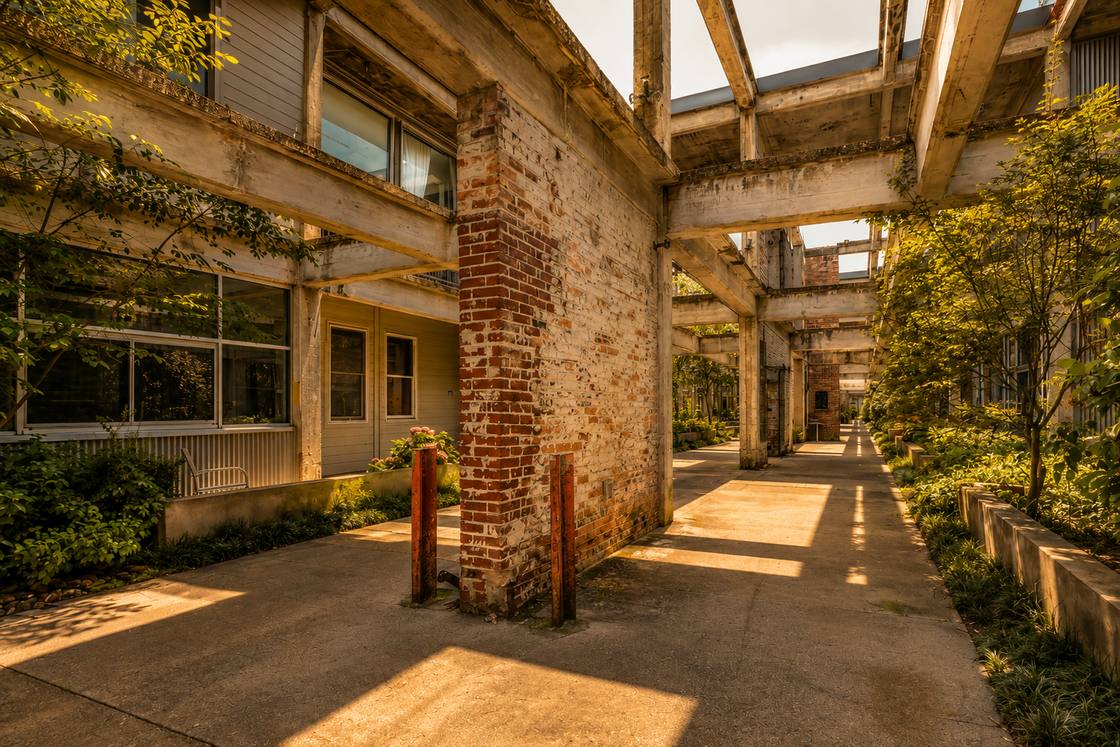
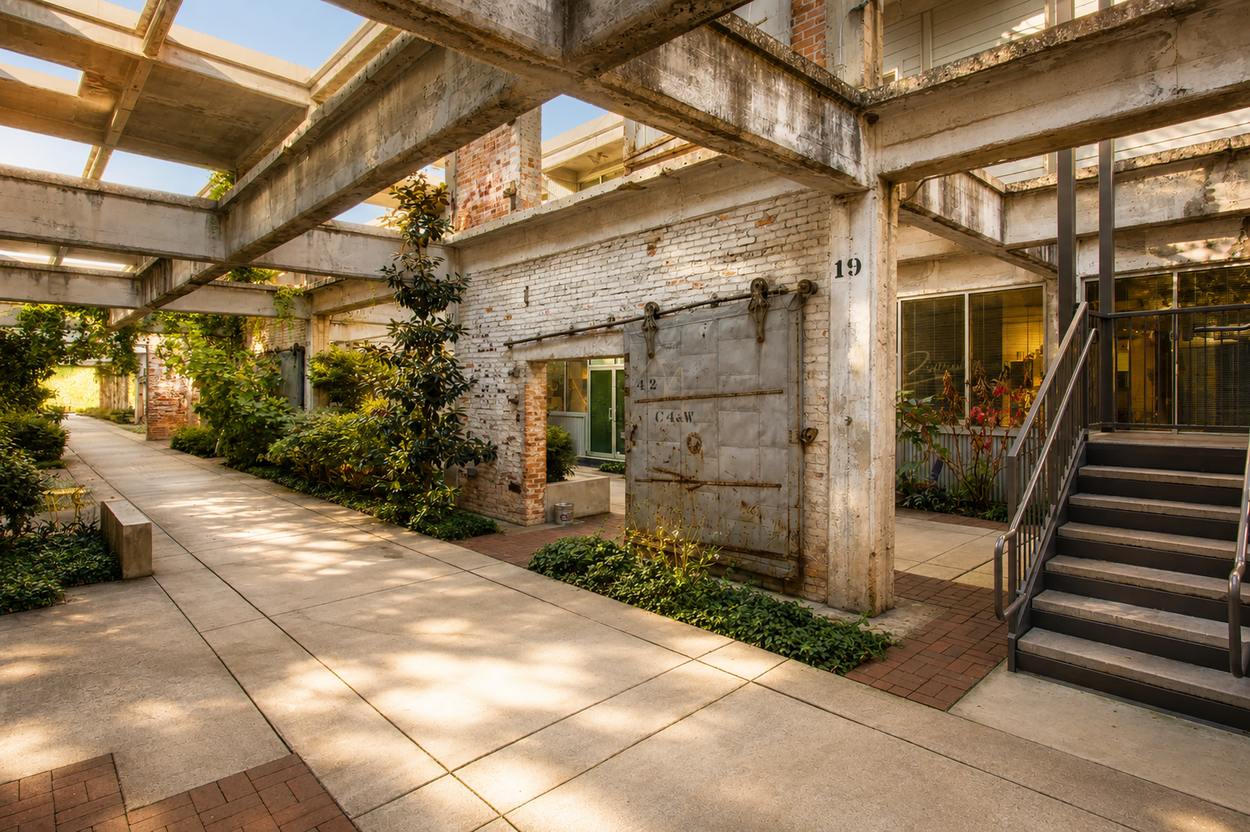
Inside, the space was divided into twenty sealed bays, each closed off by sliding metal-clad fire doors triggered to slam shut in extreme heat — so a fire could be trapped where it started. Twenty-four doors were made by Atlanta's Dowman/Dozier. In the restoration, nine were fixed permanently open and the rest rehomed across the building. Look for the original bay and section numbers still stamped on the concrete posts.
1908 · Across the street
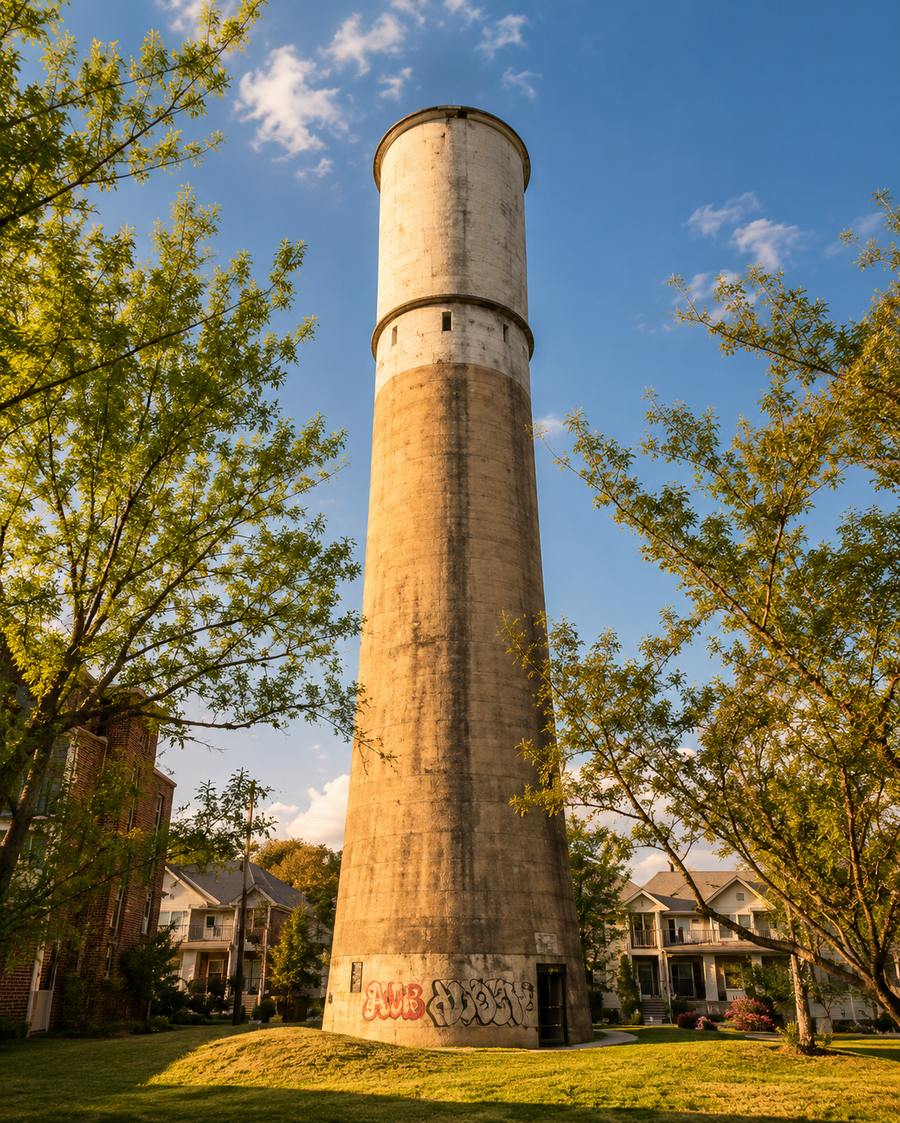
Commissioned to protect the cotton, the tower rises 135 feet with a soft, lighthouse-like taper and a cistern holding 100,000 gallons — gravity-fed to the sprinklers when needed. Completed in 1908 for about $6,000, it's the oldest surviving water tower in Atlanta. Today artist Charmaine Minniefield's installation Cosmic Cypher Prayer Circle (2018) lives inside, honoring the Ring Shout and the history of Black resistance in this neighborhood.
The press at work
At full force the press bore down with thousands of tons, squeezing bales to half their size — cotton that puffed back out afterward "like a big marshmallow." The crews were called spidermen, and the most important of them was the caller: a singer whose choreographed, blues-cadenced call kept every hand moving in time beside a machine powerful enough to be lethal. A Harper's Weekly writer once called the sound, heard on the night wind, impossible to describe and, once heard, never forgotten.
Held honestly
This ground carries hard history alongside the proud engineering. The plant was celebrated as a good investment in 1906 on the very night the Atlanta Race Massacre tore down Auburn Avenue. And the work was dangerous.
In January 1918, a young African American worker named Felix Gordon died on the job here, found within a bale of cotton after working too many hours without rest. Studioplex has no official ghost — but we do have a patron saint in Felix, whose memory we carry forward with respect.
Part two · A living landmark
Restoration left the bones exposed on purpose. Vines climb the old beams, trees rise between the columns, and preserved fire doors line walkways that were once loading corridors. Along the greenspace, the sawtooth shed rooflines and corrugated siding were rebuilt to echo their original shape — daylight monitors that once kept cotton cool now shelter a glass studio.
The road back to life
Studioplex's second life began with the Historic District Development Corporation — founded in 1980 by Coretta Scott King and Christine King Farris to protect the neighborhood around Dr. King's birthplace. The HDDC still owns part of Studioplex today.
Mtamanika Youngblood became executive director and began the process to revitalize historic Auburn Ave while maintaining the community's character, celebrating its history, and preventing the displacement of long-term residents.
The adaptive-reuse project was completed after eighteen months of meticulous restoration, opening as a city-subsidized artists community.
On November 1, Studioplex welcomed its first resident artists, chosen through a rigorous process led by an Arts Advisory Committee.
The building earned its National Register designation, and the MLK Historic District was expanded to include Studioplex — just as Mrs. King had envisioned.
Studioplex became condominium lofts in 2007 — but it never shed its creative character. The artwork, the courtyards and the maker's-eye spirit of its artist-community years are still part of the place today.
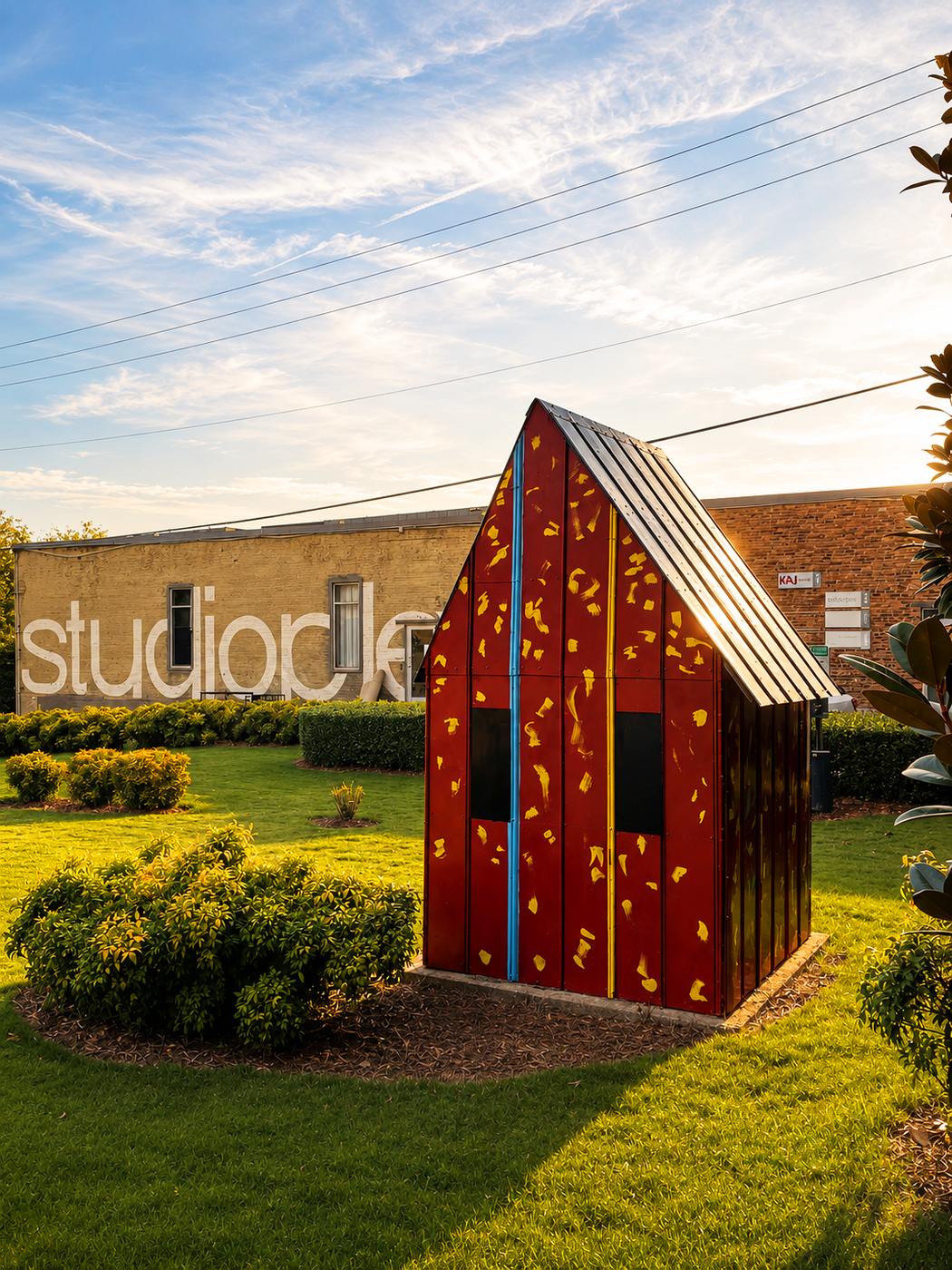
On the lot · The Red Shack
Out front sits A Hard Day's Work Shack, the largest sculpture by acclaimed artist Beverly Buchanan — commissioned for the 1988 National Black Arts Festival, later restored, and rehomed here. In Buchanan's hands the humble shack becomes a metaphor for home, memory and the triumph of the human spirit. "I believe the entire world is descended from shacks," she once wrote.
The neighborhood
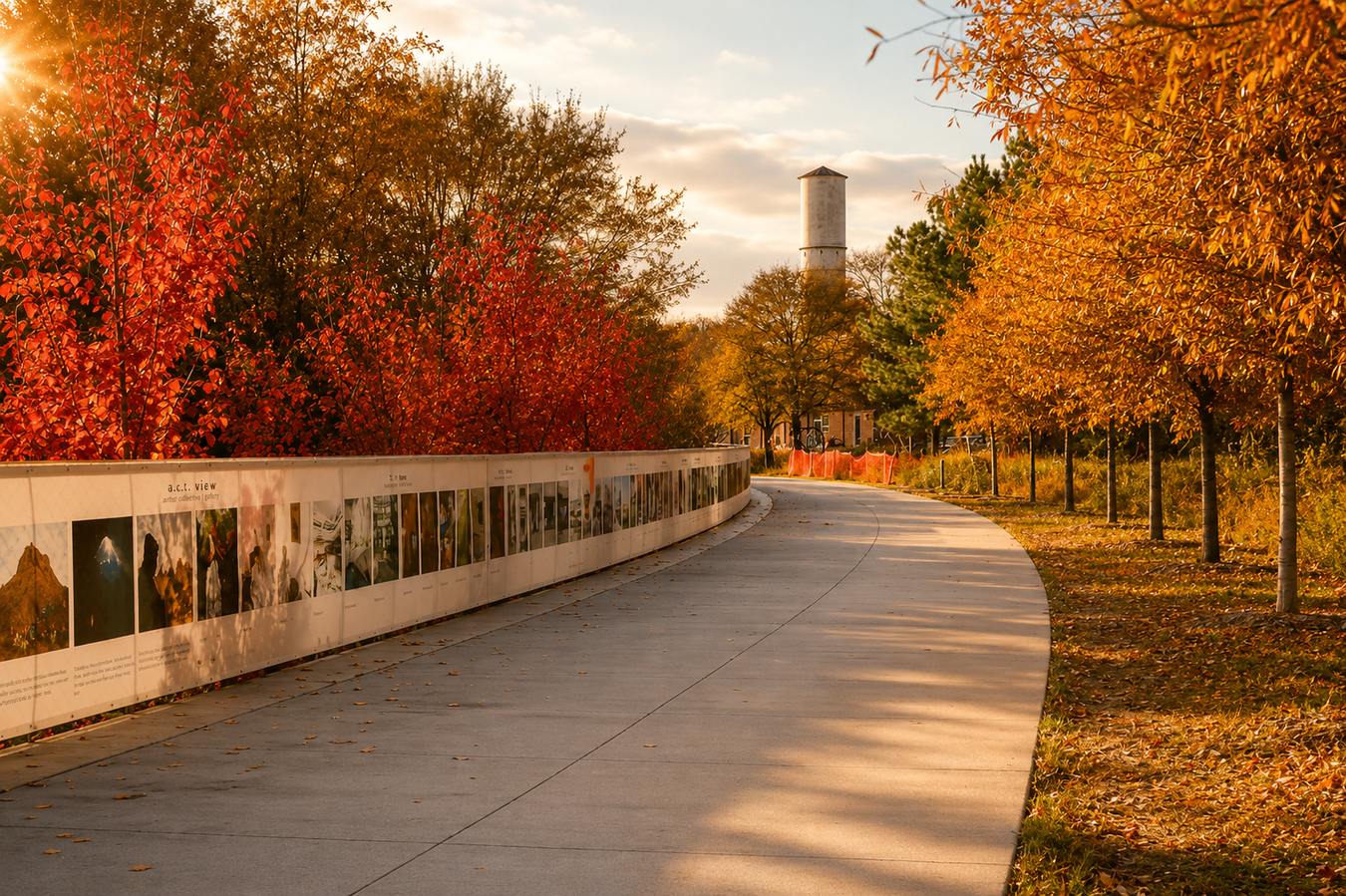
Live where history meets culture, with everything you love just steps away. We're on one of the most storied streets in America — a block from Dr. King's birthplace at 501 Auburn and Ebenezer Baptist Church — and right on the line of the old Southern Railway that's now the BeltLine.
659 Auburn Avenue NE · Atlanta, GA 30312
Protected in perpetuity
Studioplex is listed on the National Register of Historic Places and is safeguarded by a recorded historic preservation easement held by Easements Atlanta, Inc. The easement runs with the land — it binds every owner, now and in the future — so the building's historic character is preserved for good.
For residents
Pay assessments, submit requests, review documents and stay up to date on community news — all in one place.
Community Manager (MRG) · (470) 545-4781 · csm@mrgcam.com
Resources