Studioplex on Auburn
Easements
Studioplex is listed on the National Register of Historic Places and is safeguarded by a recorded historic preservation easement. Together, these protect the building’s historic character permanently — for every owner who comes after us.
What this means
Two layers of protection.
People often assume “historic” status and a preservation easement are the same thing. They aren’t — and Studioplex has both.
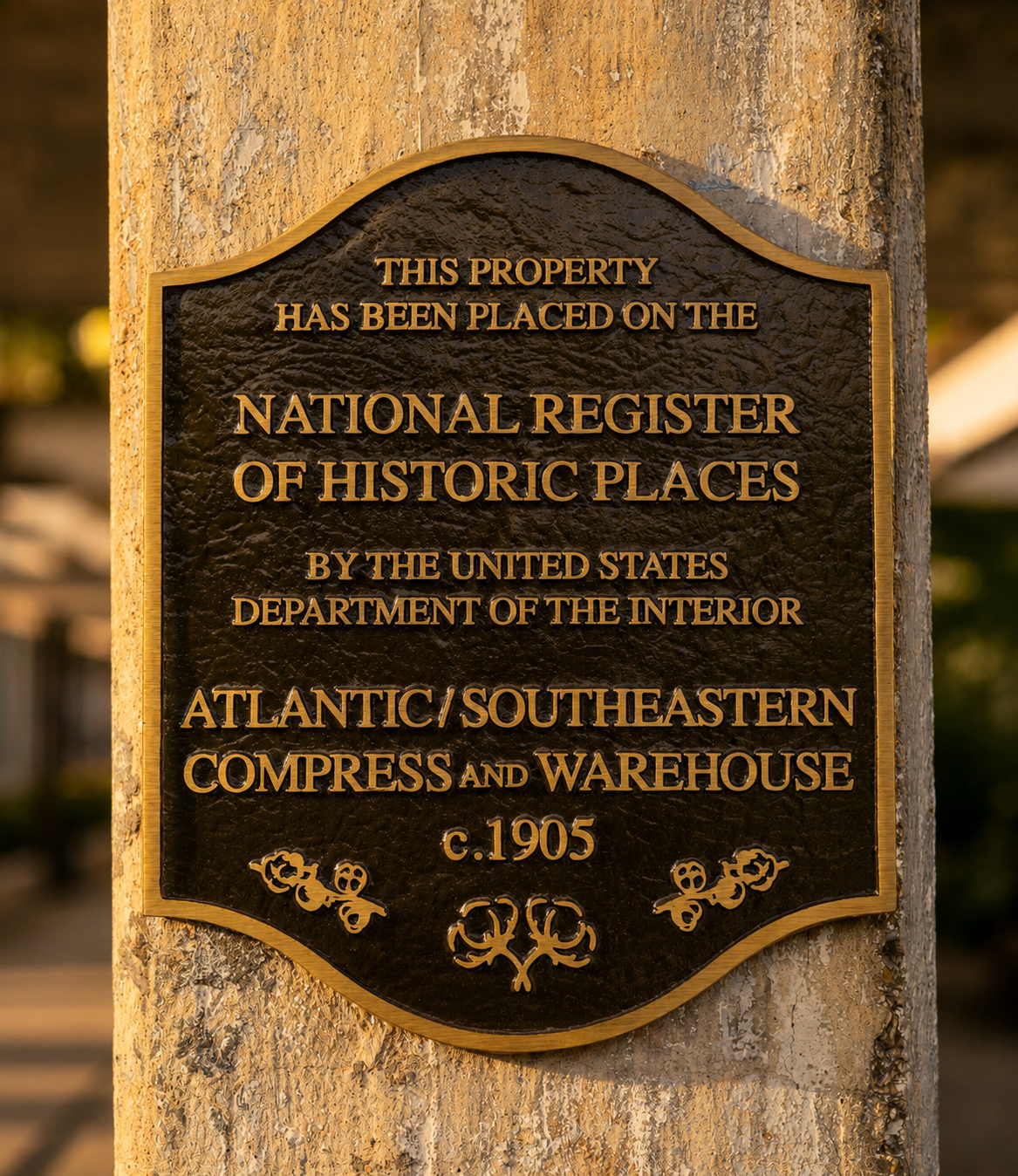
1. National Register of Historic Places
The building — the Atlantic / Southeastern Compress & Warehouse, built c.1905 — is listed on the National Register of Historic Places, and the Martin Luther King, Jr. Historic District was later expanded to include Studioplex. Listing is an honor and a recognition of significance, and it opens the door to preservation tax incentives.
2. A recorded preservation easement
The stronger, more practical protection is our historic preservation easement, held by Easements Atlanta, Inc. As Easements Atlanta explains it, a preservation easement is a voluntary legal deed agreement that permanently protects a significant historic property: the owner places specific restrictions on the property and transfers those restrictions to a qualified preservation organization, while keeping private ownership.
That last point is the important one. Easements Atlanta notes this protects a property more effectively than zoning or historic designation alone, because a future owner cannot simply opt out of it.
What does the easement protect?
Historic Character
The building’s exterior appearance and defining architectural features.
Original Materials
Brick, masonry, windows, architectural detailing and other historic elements.
Future Alterations
Exterior changes are reviewed to ensure they’re compatible with the building’s historic character.
Our Neighborhood
Helps protect one of the most recognizable historic buildings in Atlanta’s Martin Luther King, Jr. Landmark District.
Stronger than historic designation
Historic district designations can change. A preservation easement is permanent — a recorded property right that stays with the land, ensuring the building’s historic character is protected for the long term.
Why this matters to homeowners
Instead of restrictions, think of them as protections. The easement ensures that future Boards — or future owners — cannot dramatically alter the appearance or historic character of the property. That protects:
- the architectural integrity of the building
- the historic identity that attracted many owners here
- long-term property values associated with a unique historic property
- one of Atlanta’s irreplaceable industrial landmarks
It is permanently attached to the property itself — not to any particular Board or owner. Every future Board of Directors and every future homeowner inherits the same responsibilities and the same protections.
What it means day to day
In practical terms, exterior and other protected changes need prior written approval before work begins. Owners should also follow the Association’s own architectural review process through the Architectural Control Committee (ACC).
- Planning exterior work? Start early — approval comes before work begins, not after.
- When in doubt, submit an ACC request first. Undoing unapproved work is far more expensive than planning it properly.
Did you know?
- Studioplex is listed on the National Register of Historic Places as part of the Martin Luther King, Jr. Landmark District.
- The Auburn Avenue Warehouse, during its adaptive reuse, was an artists’ community.
- Preservation easements help make the rehabilitation of many of Atlanta’s most iconic buildings financially possible.
Studioplex — at a glance
About Easements Atlanta
Easements Atlanta, Inc. is a nonprofit that works with property owners to preserve the historic places that make Atlanta unique. Their responsibility is to ensure the protected property continues to retain its historic character. Studioplex sits in their portfolio alongside landmarks such as the Fulton Cotton & Bag Mill, the William Oliver Building, Telephone Factory Lofts and Swift & Company Lofts.
Learn more about Easements Atlanta → See our portfolio entry